Wednesday, March 6, 2013

Obesity and Politics


When people think about obesity they think big. Words like out of shape, sick, large, and huge may come to mind. Now a days we see obesity everywhere. Reality TV shows, magazines, and all over the breaking news. It  has become something that people are famous for. Whether you may think this is funny or ok thing, I do not. I don’t think obesity should be viewed as a “good” thing. Let’s take a look back to the past  to the present on obesity in politics. Is it bad to be a leader of a country or a organization and be obese?


William Howard Taft was the 27th president of the United States. He was obese, and often remember by this characteristic. When he took office  in 1909 and was there until 1913. Everyone that knew him said he was a nice and good natured guy. He was a member of the Republican Party. Although he was nice and kind, this didn’t mean he was a good president. He thought of his job to be more fun than  viewing is as the leader of the nation. He also was not liked by other presidents, such as Teddy Roosevelt. He was very smart person.  People often said that his figure didn’t match up with his mind. He graduated second in his class at Yale. This also didn’t mean he made very smart decisions as president. The most important thing about Taft’s presidency was that he knew for himself that he wasn’t a good president. This may have been part of the problem of his growing obesity.


When Taft entered office he weighed 300 pounds. He couldn’t help it though. He was a big baby which got him the name Big Lub and later on the name Big Bill. At the beginning of his campaign, before he took office, reporters were mad. They said his campaign was straying. Taft’s response, after he said he was losing weight by exercising  was “It’s not easy to be a presidential candidate, not much easier than it is to keep down ones flesh” (McPherson). Taft’s troubles only grew worse once he took office. He became stuck in the White House bath tub because of his size. The White House had to install a bigger bath tub just for Taft. It was seven feet long and 4 feet wide. This bath tub could fit 3 of the workers who installed it. Food became Taft’s go to. He no longer listened to his wife’s strict diets. He hid his food, and sneaked out to get snacks. He also planned trips he knew would have extreme banquets with lots of food. Since his weight went up and down during his presidency, he gained 50 more pounds in office. Historians believe the reason for his weight problems were pressure. They say he must have eaten under pressure. Food gave him comfort during hard times.  A quote from the book “ To the best of My Ability”, says “He’ll never be regarded as a great president, or even as a good one, but perhaps someday his obesity may cease to be his legacy” (McPherson).


In the present day a new leader is affected by this same problem. Chris Christie. He is the governor of New Jersey. He is also of the Republican Party. He tried to run for president during the 2012 election, and is now trying to regain popularity and run in the 2016 election. Since Taft there as only been a handful of obese presidents. Bill Clinton often had to worry about his weight and keep it under control. The questions and concerns that arise about Christie as he thinks about running are his body size, being a national leader verse the obesity epidemic present in America today. Christie is well liked and well known. He has been fighting with this issue on a personal level for three decades, now he has to face it on a political level. One of the concern is the TV. When he is making public speeches people can see him on TV and this will make a impact on their views. He is aware that he has problem and is will and making an effort to fix it. Chris Christie said this about himself, “I mean listen, I need to lose weight, there’s no news flash there, and I’d be healthier if I did. But the objective indicators of my health, you know, my blood pressure, my cholesterol, my asthma, is very much under control… But I also know that I’d be a lot healthier if I lost some weight. It’s a constant struggle. I’m trying. I go up. I go down. It’s an effort” (Christie).


Now with the issue of obesity at our feet in America. Obesity is when someone is over ten percent of their recommended weight. More than one third of the population of 20 and older people in America are obese. Another one third are overweight. Obesity causes 400,000 deaths a year. Obesity is now affecting the younger generations too. Fifteen percent of the population under the age of 18 are obese. There are many causes for obesity, some not as extreme as others. Environmental factors, eating habits like eating fast food, genetics, and emotions all affect obesity. Where does this leave us? It leaves us at our country only getting worse.


Overall obesity is a large problem that has built up little by little over time. From Taft, whose weight will be remembered through game shows and trivia question, to Chris Christie, who could be our next president. I believe that the concerns we as a nation have with obesity are valid. What we consume is not healthy for our bodies, our minds, or our country. With Chris Christie people will judge. They will say that someone his size has no room to talk about health concerns facing America. All Christie along with other Americans facing this problem can do is try and make a effort. 


                                                  Chris Christie, the Governor of New Jersey


                                             William Howard Taft, the 27th president of the US


                                                      The specially made bath tub for Taft


                                            A chart of the rate of growing obesity in the USA


Sources
"To the Best of My Ability," by James M. McPherson  This source is my primary source, but also helped me find general information on Taft's presidency, along with some information about his obesity.

"The History of the American Presidency" By John Bowman This book source, a secondary source, helped me to find about the starting weight of Taft.

AVL- Biography on William Howard Taft  This source helped me learn about the pressures of Taft's obesity and how it affected him in office.

An Article on Chris Christie's Weight Problems This source helped me to learn about the weight problems that Christie faces and how they will affect him if he becomes president.

"Has Chris Christie Passed His Sell-By Date?"  This source I used as a primary source as well as a source about Chris Christie politics.


 A website on Obesity in America This source helped me learn get some facts on the basic epidemic of obesity. 

Tuesday, February 19, 2013

Music and Song of World War I

The Great War was the second greatest conflict of all time. It was often referred to as the war to end all wars, lasting four years. Those who fought in this war may call it something else. They call it the Singing War. In the United States, Woodrow Wilson's citizens were making music on a large scale. The scale was large enough to support the making of dozens of pianos, public sheet music, and sound recording. During this time, right before the war started, sheet music publishers thrived for five years. They marketed 7,300 songs. The sheet music publishers contribution of patriotic and war songs is what made this war so focused on music.

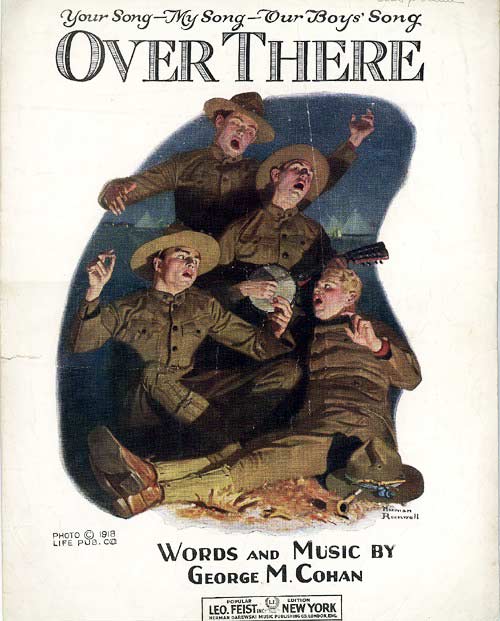
With all the information that we have today on the history of music of the Great War, we can picture the same recordings or authentic echoes of the songs that provided courage to those heading east across the Atlantic or Southward to the English Channel, fearing a moment of diversion for those in the trenches and some comfort to the lonely and scared left at home. There were many songs that were popular during war that served as the soldiers anthems. The most popular one was Over There. It was written by George M. Cohan in 1917, at the beginning of the war. Its arrogant enthusiasm characterizes the music and the spirit of those men who have not yet seen the realities of the battle. Les Cleveland once said, "The music industry also promoted an alternative view of the war as an opportunity for adventurous excitement implicit as large George M. Cohan's, Over There." The lyrics of Over There promise that the Yanks are coming and make the boast, it wont come back til its over there.  Keep the Home Fire Burning was an other song very popular during the war. Though it originated in England, it was very popular in America as well. It was written by Ivor Novello, and it was his greatest hit. Another very famous war song is Its a Long way to Tipperary. It was very popular with soldiers on the western front during the summer of 1914. It was written by Jack Judge and Harry Williams in 1912, before the war. 

David Bishapm wrote an article in the New York times in 1916, talking about the songs of war and his opinion on what they will become. He said that the extraordinary events that were taking place would have a great effect on music, which was true. He said because composers weren't able to put pens on paper due to the tragedy of war they couldn't write. He says of the famous George Cohan on writing Over There, he was just trying to please the public by not stopping until he created a successful piece. He also believed that war was was turning American composers away from their calling. He said the young composers enjoyed war too much to write but, its up to the elders to keep the torch burning. David believed that classics should be banished and no related to war since they were written centuries ago with countries that the US is now at war with. Even though much of his article is his opinion, the majority is true and its a primary source. He talks of how not all music was written to arouse patriotism like Tipperary. It was written before the war for vaudeville performances. While this is true, its his opinion that its should be withdrawn. Another song he believes that should be withdrawn is Hand of Hope and Glory. There was no war in its inspiration, because it was written to bring King Edward VII to the throne.


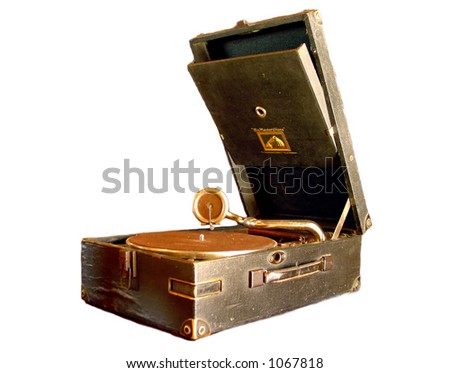
The use of songs in war for the soldiers is the most important and influential topics. Soldiers gathered hundreds of songs from multiple sources, sheet music composers of all ages. They gathers popular songs of the day, written before the war or hymns for around the world. Along with making up songs, they made parodies of all the songs they found, made up by warriors who took the known melodies and changed the words to suit their needs. Singing was a group action for the soldiers. Singing formed bonds of comradeship, reinforced belonging to a group, helped them to get to know each other, and helped the soldiers endure the strain of unending combat and service. They main idea of songs from this time is that these songs were theirs.They had the right to sing them. They were the ones in the trenches, fighting for their countries, and trying to survive. Songs that they already knew were played through out the trenches using a phonograph, or a gramophone. They gramophone was portable. It provided some entertainment for the many that were knowingly about to die. The industry in the US for the gramophone was booming. They are much like a portable record player, just smaller and more compact.


Over all music and song played a big role in World War I. They provided hope and perseverance for soldiers. Songs like Over There and Tipperary lead the way for soldiers. The gramophone was also a useful tool for the trenches. The music and song of World War I, lead the way for the same thing to happen in World War II.

The poster for "Tipperary"


\                                             A Gramophone that the soldiers often carried. 


                                                        Over There by George Cohan

Sources 

The Lyrics and Music of the song Over There - Primary Source I used this source to look at what the lyrics actually meant to the soldiers.

Songs from the World War I Era - AVL I used this source to find the different songs from the war.

The lyrics and information of Tipperary I used this source to understand the lyrics of Tipperary.

A Quote on the song Over There. - Primary Source I used this source as a perspective on Over there.

David Bishapm's Article - Primary Source I used this source to get information and a different opinion of the songs of the war.

Canadian Soldiers I used this source to find about how music effected the soldiers.


Monday, January 14, 2013

Great White Fleet

I am currently working on a project on the Great White Fleet. Im writing all of my information onto my postcards. I have to get them all in order by date and organize my information into sentences. I also am working on finding pictures that will fit onto my notecards.

Friday, November 16, 2012

The Mystery of H.H. Holmes

During the late 19th century Chicago was a place of growth and development. Powerful new forces were acting upon it. It was growing in all different ways, population, industry and even architecturally. Chicago was growing skyward, with the new idea of sky scrapers and high buildings. While Chicago had its new point of fame, it was also looked down on by other competing cities. It cheated bu annexing large expenses of land just in time for the 1890 census. Because of this they were viewed by people of the east as greedy, hog slaughtering people, who were not soon to recover. The World Fair is what brought much of the new fame to Chicago above everything else. It won the vote to host the World Fair against New York City but 43 votes.The World Fair gave Chicago new opportunity for clever men to commit fraud and theft because of its growing population of people coming into the city. One of theses men was H.H Holmes. He would soon become known as America's first serial killer. 


H.H. Holmes given name was Herman Webster Mudgett. He was born in Gilmanion, N.H. As a young kid he was scared of the doctor, but that didn't stop him. He went to Michigan Medical school were he stole bodies from the lab and was involved in shady business. Holmes was very strange on the inside, he didn't appear this way on the outside. Later in life he moved to Englewood, the highest growing suburb in Chicago at the time of the worlds fair. As he walked the streets of Chicago, he could be described as dressed nice. He gave off an impression of wealth and achievement.He walked with confidence. His eyes were described as great murders. He had the same impression on women. He smiled often at them as he held them in his blue daze. He often lied to women about who he was or what he did, so he could make anything happen for them. He was married four  times, and yes they were all at once. He first married Clara Lovering. While he was still married to Clara, he married Mary Belknap and they bore a baby named Lucy. Next he married Georgina Yoke. Finally He married Julia Conner, who bore a baby, so they had to get married. When Holmes found a women that interested him, he became obsessed with her. This often meant more then one women at a time. This obsession is what soon drove Holmes to become clinically insane. 

Holmes had a brillant idea of a Hotel. He wanted to house all of the women, or women that he found walking the streets heading to the World fair in his hotel. He would call it the Hotel of the Fair and it would be within walking distance of the fair. He wanted to make it comfortable, but cheap. This building was located at 63 and Wallace. The 1st floor would be retail shops with women to generate income. The second and third floors would be apartments including his large living space and office on the second floor. While this circulating normal and a nice thing to create, in the mind of Holmes it was anything but that. This building would be a slaughter house. Holmes was crazy, crazy and obsessed with women, Weither it be immigrants new to Chicago or innocent goers of the World Fair, Holmes would get them. There would be doors on the second floor that opened to brick walls of, stairways to nowhere, and only doors open able from the outside. Holmes would have a room next to his office with a walk in vault with air tight seems and coated iron walls to suffocate his victims. He had gas jets embedded in the walls of the apartments that only he could control. He had a wooden chute descending from the second floor coated with axle grease to make the bodies slide down to the basement easier. In the basement he had lime pits, giant furnaces, pits of acid, and a stretching rank to do things to the bodies. Holmes Hotel soon became known as The Castle. While it was being built people weren't allowed to work on it for long periods of time because Holmes didn't want them to gain a true picture of its unusual features. 

Holmes careers as serial killer came to an end over a fraud scheme of all things. In order to get out of this scheme, Ben F. Pritzel faked his death with a cadaver to bilk the insurance company that was after Holmes, of 100,000 dollars. This plan succeeded, but when Holmes did give the man that helped him half of the money, he turned him in. This put Holmes in yet another turmoil.  Holmes was convicted of four murders, confessed to 27, succeed but was said to have killed up to 200. Holmes received the death sentence on November 30, 1895. Before he dies he sold his story to the Hearst Newspaper. William Randolph Hearst was the creator of yellow journalism. During this time period the rate of newspapers circulating daily increased. This allowed for the creation of yellow journalism, which was reporting in bold graphics to reach a mass audience. This helped gain publicity for Holmes trail.  Holmes wrote memoirs to the 27 people he confessed to killing. Later he said he just did that for a publicity stunt. 

Holmes life was a lived in secret for awhile. He appeared as a wealth, prospering man, just like the city of Chicago, Holmes was really a horrible person. He was a serial killer and a murder. He became known forever as Americas first serial killer.


Wednesday, October 24, 2012

My View on the Faces of America

In the Faces of America video I learned a whole lot about immigrants, most of it I didn't already know. Among the people in the United States, there are alot of famous people with different cultural backgrounds with many different stories. I learned that even though the people that were speaking in the video weren't first generation immigrants, they still felt very close, sometimes emotionally to their previous family members. They also didn't know many of the family members that they felt so attached too. For example Eva Longoria cried when she heard about what a big deal her great grandfather was awarded for being such a good leader in war. I also learned that it is amazing how different people are drawn to their different cultures, like how Eva Longoria is tied to her Native American roots as well as her Hispanic roots.

It means alot to be a nation of immigrants. You would have to get up and leave your family, that you may never see again. You may also be nervous about the work that you are about to encounter as you come to America. It would take alot of courage and bravery to come to just pack up and leave. You may also be scared at what people may think when they see you, maybe not having seen someone of your race or color before. I think that many nations of immigrants has greatly made an impact on America today. I think due to the number of different races, colors, cultures, and religions has made people more accepted today. America one big melting pot where no one gets left behind or left out. Everyone is equal here and I think on of the reason that that is true is because of the nation of immigrants. While I'm not aware of any connections to immigrants of the 19th century that I have, I feel like I could absolutely take a walk in their shoes now more so then I could have before I watched this documentary. I have a better understand and respect for the 19th century immigrants, as well as the current immigrants today.
Irish immigrants of 1902

Thursday, October 18, 2012

The Life and Times of Andrew W. Mellon

Andrew W. Mellon was a polish immigrant. He started to work at a young age with his father at his business.  Like an normal person Andrew wanted to make money on his own and create his own wealth. Even though he felt that way he never put forth the work necessary to create such wealth. Andrew helped found and fund ALCOA, Carborundum, Koppers, and Gulf Oil companies. While he helped fund and found these, he was rarely interested in details of oil business, but he acquired extensive holdings from these companies. That was fair, but he wasn't necessarily a "part" of these oil industries. He finally got his head in the game, and by 1914 he was the richest man in the U.S. He wanted to do other things involving politics, so he ran for sectary of treasury in 1921 and got his wish. As sectary he cut taxes and enforced Prohibition. After being sectary of treasury, he still wanted to be involved with the country, so he was sent to Britain as the American Ambassador. During his life time he gave away 10 million dollars during his life to charity, but mainly to the National Gallery of Art in D.C.

While Andrew was a great man who attained much wealth, he was some what unpopular during different times in his life. He became unpopular during the Great Depression which was a time when the U.S. as a whole was a dying as a country due to debt and the stock market crash. Hoover was the president at this time and Andrew suggested to liquidate everything, farmers and real estate, etc. This meant people would work hard and people would work for more life. But the problem with this was that people couldn't work during a period there being no work, jobs, or money. Andrew also wanted to "weed out" weak banks as a harsh but necessary need for recovery of the banking system. While he was Sectary of treasury during the the great depression, he was over sees most of the time in Europe, which did no good for the people suffering in America. Later on in his life Franklin Delano Roosevelt's administration subjected Andrew in full investigation of his personal income tax returns. Franklin and Andrew did not get along, but finally the trail was exonerated, sevens months before Mellon's death.


http://en.wikipedia.org/wiki/Andrew_W._Mellon
Andrew W. Mellon
http://www.mellon.org/about_foundation/history/andrew-w-mellon